
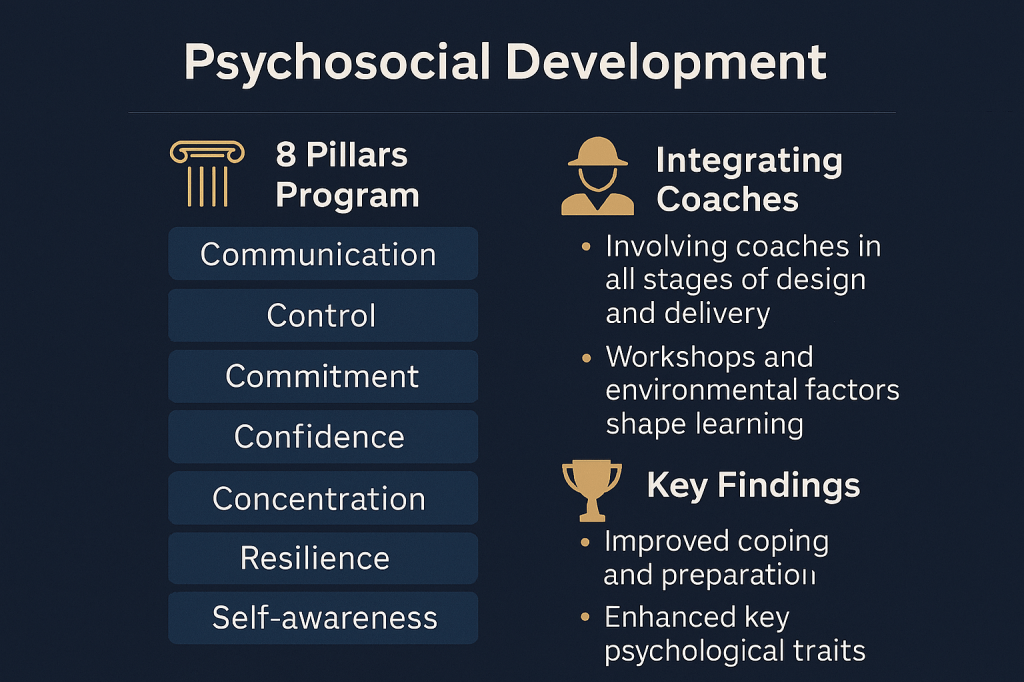
Developing well‑rounded athletes requires more than physical training—modern coaching increasingly emphasises psychosocial skills such as communication, resilience, confidence, and the ability to cope with pressure. Two of my recent peer‑reviewed papers—one from the International Sport Coaching Journal (ISCJ) and another from The Sport Psychologist (TSP)—offer evidence and practical examples of how structured psychosocial development programs can meaningfully enhance the growth of academy soccer players. Below, I’ll summarise the key themes, findings, and implications from both studies and explore what they mean for coaches, clubs, and player development environments.
1. Why Psychosocial Skills Matter in Youth Soccer
The TSP article emphasises that psychosocial characteristics provide performance advantages across sporting contexts. However, developing these skills is not straightforward—they require context-specific knowledge and strong working relationships between coaches, support staff, and players.
Both studies highlight a growing recognition that psychosocial development is not an add‑on, but a foundational component of athlete growth.
2. The “8 Pillars” Program: A Structured Approach to Development
The ISCJ study presents the 8 Pillars program, an evidence‑informed framework designed to help youth athletes develop key psychological skills. The pillars include:
- Communication
- Control
- Commitment
- Confidence
- Concentration
- Resilience
- Presence
- Self‑awareness
The program was delivered through player workshops, coaching practices, and intentional environmental manipulation. Across a season, 25 academy players completed questionnaires assessing psychological characteristics and self-reported skill development. The results were promising: significant improvements emerged in imagery and preparation, social support, active coping, and several of the eight psychosocial pillars themselves. This demonstrates that targeted, multifaceted interventions—delivered largely by coaches—can measurably enhance athletes’ psychological skill sets.
3. Embedding Coaches in the Process: A Key to Success
The TSP paper emphasises the importance of involving coaches at every stage of the design and implementation process. Workshops, ongoing communication, coach education, and collaborative planning were essential elements of the program highlighted in the study. Early reflections suggested workshops were particularly effective for teaching psychosocial skills, while environmental adjustments helped integrate learning into daily training routines. The authors recommend that key stakeholders invest time in educating coaches so they can effectively foster these characteristics in their players.
The ISCJ findings reinforce this: coaches played a central role in program delivery and were instrumental in creating meaningful changes in players’ skills and behaviours over a season.
4. Evidence of Real, Measurable Impact
Across both papers, data suggest that structured psychosocial development programs can:
- Improve coping skills, including active preparation and use of social support.
- Enhance core sport‑psychology competencies, such as communication, control, concentration, and resilience.
- Strengthen the coach–athlete relationship, as the programs encourage ongoing collaboration and reflection.
- Promote better integration of psychological training into the overall performance environment.
Such outcomes are important not only for performance but also for players’ long-term wellbeing and capacity to navigate the demands of elite sport.
5. Practical Takeaways for Coaches and Academies
✔ Prioritise psychosocial skill development
Both studies show it is essential—not optional—for high-quality athlete development.
✔ Embed learning in daily coaching
Workshops are useful, but the environment must reinforce these lessons through consistent coaching behaviours and structured opportunities for athletes to practice psychosocial skills.
✔ Build collaborative relationships
Coaches, psychologists, and support staff must work with players, not simply deliver to them, in order to maximise program effectiveness.
✔ Invest in coach education
Coaches need training not just in technical and tactical aspects, but in delivering psychologically informed practices and shaping developmental environments.
Conclusion
Together, these two papers provide robust evidence that psychosocial development can—and should—be a core component of academy coaching. By combining structured programs such as the 8 Pillars approach with ongoing coach involvement and environmental design, academies can create richer learning experiences that support both performance and personal growth. This research, and others, mark an important shift toward holistic, evidence-based player development, redefining what it means to prepare young athletes for the modern game.
Full references are here
Mitchell, T. O., Cowburn, I. H., Piggott, D., Littlewood, M. A., Cook, T., & Till, K. (2022). Fostering Psychosocial Characteristics Within an English Soccer Academy. The Sport Psychologist, 36(2), 139-149. Retrieved Feb 13, 2026, from https://doi.org/10.1123/tsp.2021-0105
Mitchell, T. O., Cowburn, I. H., Alder, D. B., Till, K., Littlewood, M. A., Cook, T., & Piggott, D. (2025). Integrating Psychosocial Skill and Characteristic Development Into an English Academy Soccer Coaching Program: A Preliminary Investigation. International Sport Coaching Journal, 12(2), 156-168. Retrieved Feb 13, 2026, from https://doi.org/10.1123/iscj.2023-0031
 info@ehponline.co.uk
Leave a comment