
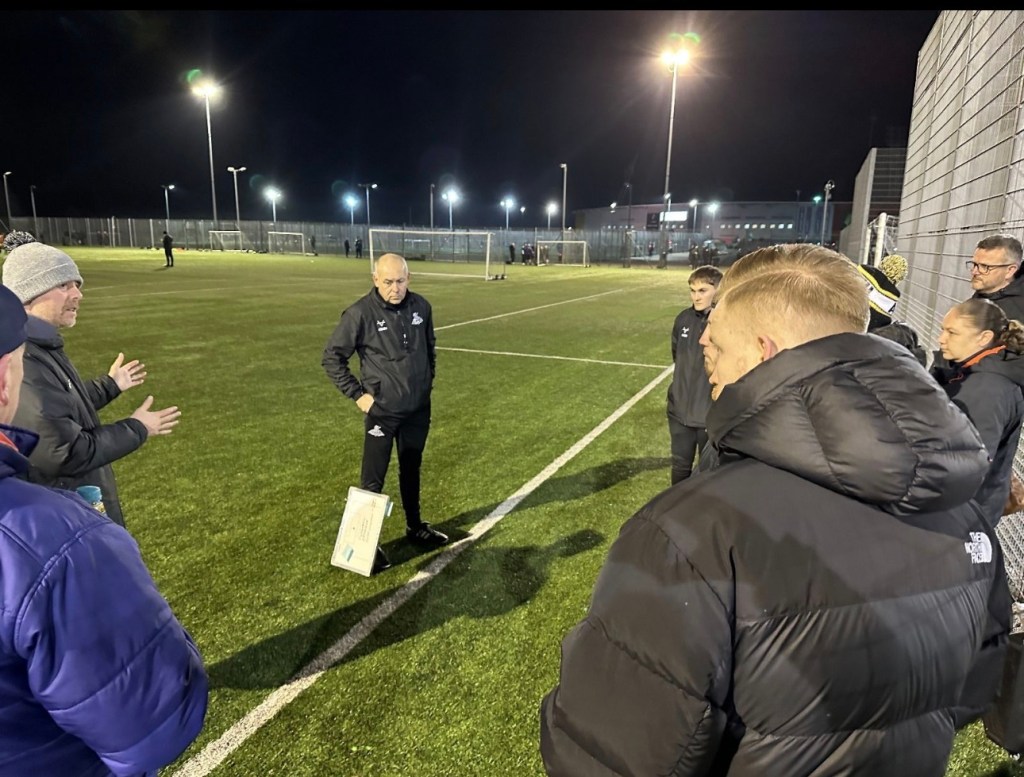
In modern sport systems, coaches operate within complex, high-pressure environments that demand psychological, relational, and organisational skills alongside technical expertise. As a result, sport psychologists are increasingly working with coaches rather than solely delivering interventions to athletes. Research suggests that when psychologists form effective collaborative relationships with coaches, the impact can extend across the entire performance environment, influencing athlete wellbeing, engagement, and performance (Carr, 2012; Hague et al., 2021).
Why Working with Coaches Matters
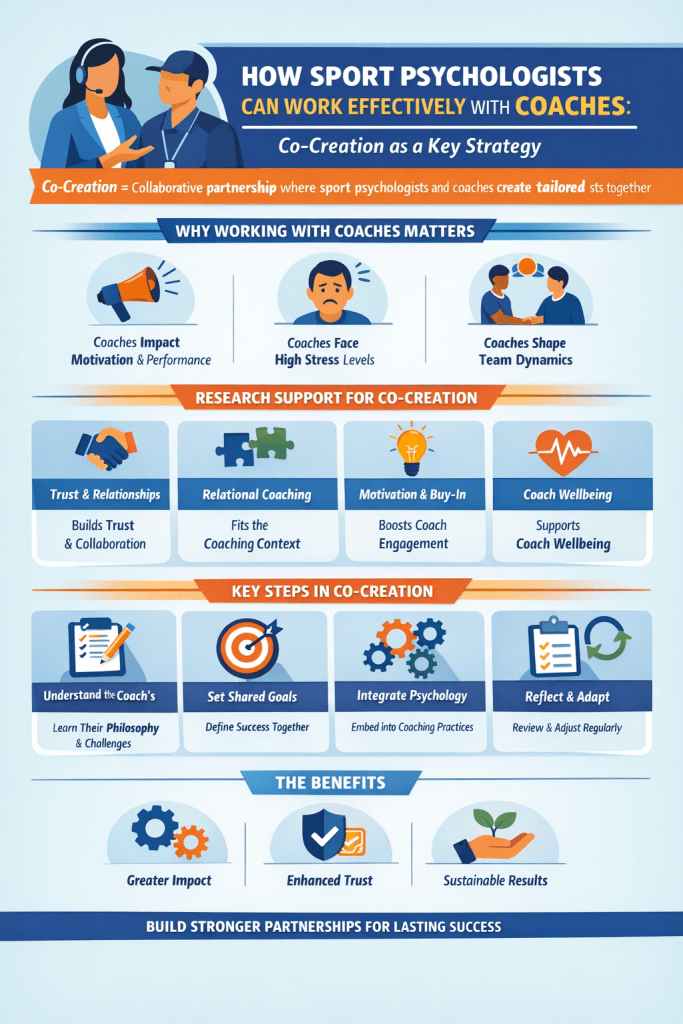
Coaches play a central role in shaping motivational climates, relationships, and team dynamics. Their behaviours influence athlete engagement, confidence, learning, and retention across developmental and elite contexts (Curran et al., 2015; Hague et al., 2021). At the same time, coaching is recognised as a psychologically demanding role characterised by performance pressure and emotional labour (Potts et al., 2021).
What Is Co-Creation in Sport Psychology?
Co-creation refers to a shared, relational process in which sport psychologists and coaches collaboratively shape the focus, methods, and outcomes of their work. Rather than psychologists acting as external experts who prescribe solutions, co-creation positions coaches as knowledgeable contributors with valuable contextual expertise (Carr, 2012; Keegan, 2016).
Suggestions for working with Coaches
Trust and Consulting Relationships
Effective sport psychology consulting with coaches is underpinned by trust, flexibility, and relationship quality (Sharp & Hodge, 2013).
Motivation, Autonomy, and Buy-In
Autonomy-supportive environments enhance learning, engagement, and wellbeing (Curran et al., 2015).
Applying Co-Creation in Practice
Start With the Coach’s Context
Effective collaboration begins with understanding the coach’s philosophy, constraints, and environment (Keegan, 2016).
Conclusion
By adopting co-creation as a core strategy, sport psychologists can enhance trust, relevance, and impact—supporting coaches to lead healthier, more effective sporting environments.
References
Booth, S. J., Appleton, P. R., & Duda, J. L. (2025). Conceptions of the coach–team relationship in youth team sport. International Journal of Sport and Exercise Psychology. https://doi.org/10.1080/1612197X.2025.2512552 [tandfonline.com]
Carr, C. M. (2012). The role of the sport and performance psychologist with the coach and team. In The Oxford handbook of sport and performance psychology. Oxford University Press. https://doi.org/10.1093/oxfordhb/9780199731763.013.0036 [academic.oup.com]
Curran, T., Hill, A. P., Hall, H. K., & Jowett, G. E. (2015). Relationships between the coach‑created motivational climate and athlete engagement. Journal of Sport & Exercise Psychology, 37, 193–198. https://doi.org/10.1123/jsep.2014-0203 [researchgate.net]
Fortin‑Guichard, D., Boudreault, V., Gagnon, S., & Trottier, C. (2018). Experience, effectiveness, and perceptions toward sport psychology consultants. Journal of Applied Sport Psychology, 30, 3–22. https://doi.org/10.1080/10413200.2017.1318416 [tandfonline.com]
Hague, C., McGuire, C. S., Chen, J., Bruner, M. W., Côté, J., Turnnidge, J., & Martin, L. J. (2021). Coaches’ influence on team dynamics in sport: A scoping review. Sports Coaching Review. https://doi.org/10.1080/21640629.2021.1874096 [g4yd.nipissingu.ca]
Keegan, R. (2016). A model of the applied sport psychology consulting process. Journal of Applied Case Studies in Sport and Exercise Science. [researchgate.net]
MacGabhann, S., Newman, P., Witchalls, J., Dowse, R., Waddington, G., & Cobley, S. (2025). Why do some respond and develop more from coaching than others? Sports Medicine, 55, 2147–2189. https://doi.org/10.1007/s40279-025-02267-6 [link.springer.com]
Potts, A. J., Didymus, F. F., & Kaiseler, M. (2021). Psychological stress and wellbeing among sports coaches. International Review of Sport and Exercise Psychology, 16, 554–583. https://doi.org/10.1080/1750984X.2021.1907853 [tandfonline.com]
Sharp, L.‑A., & Hodge, K. (2013). Effective sport psychology consulting relationships. The Sport Psychologist, 27, 313–324. https://doi.org/10.1123/TSP.27.4.313 [academia.edu]
Smith, R. E., & Smoll, F. L. (2017). Coaching behavior and effectiveness in sport and exercise psychology. Oxford Research Encyclopedia of Psychology. https://doi.org/10.1093/acrefore/9780190236557.013.188 [oxfordre.com]
 info@ehponline.co.uk
Leave a comment